Gravure printing is widely used for applications where high-quality and consistent reproduction is important. Packaging, labels, decorative materials, and other printed products often require precise images, stable colors, accurate registration, and reliable surface quality throughout long production runs.
Maintaining these standards can become challenging when printing machines operate continuously at high speeds. A small problem that begins during production can affect a substantial amount of material if it is not identified quickly.
Automated quality monitoring provides manufacturers with a practical way to improve visibility during production. By combining cameras, controlled lighting, image processing, and inspection software, production teams can monitor printed material and identify potential quality problems while the process is underway.
Understanding Quality Control in Gravure Printing
Gravure printing uses engraved cylinders to transfer ink onto a substrate. The process is capable of producing detailed and consistent images, but maintaining stable output requires careful control of several production factors.
Ink application, cylinder condition, material movement, registration, drying, and other process variables can influence the final appearance.
Because multiple factors can affect print quality, continuous monitoring can be valuable. It allows manufacturers to identify visual changes rather than relying exclusively on periodic manual checks.
Why Continuous Inspection Matters
Manual sampling is a common quality-control practice, but it provides only a limited view of a continuous production run.
If a defect appears shortly after a sample has been approved, the machine may continue producing affected material until another inspection takes place.
Automated inspection can observe production continuously. This makes it possible to identify potential problems closer to the point where they occur.
Early awareness can give operators more time to investigate the cause and determine whether corrective action is necessary.
Common Gravure Printing Quality Problems
Gravure production can involve a variety of visual defects.
Registration Errors
When multiple colors or printing elements need to align accurately, registration differences can affect the final appearance.
Ink-Related Variations
Changes in ink application may result in differences in color density, coverage, or overall appearance.
Spots and Streaks
Unwanted marks can occur because of contamination, process conditions, material issues, or equipment-related factors.
Missing Print
Sections of graphics or other printed elements may appear incomplete or absent.
Surface Irregularities
The substrate and printing process can also contribute to unwanted marks or surface inconsistencies.
The ability to identify these issues depends on the inspection setup and the specific production requirements.
How Automated Inspection Supports Production
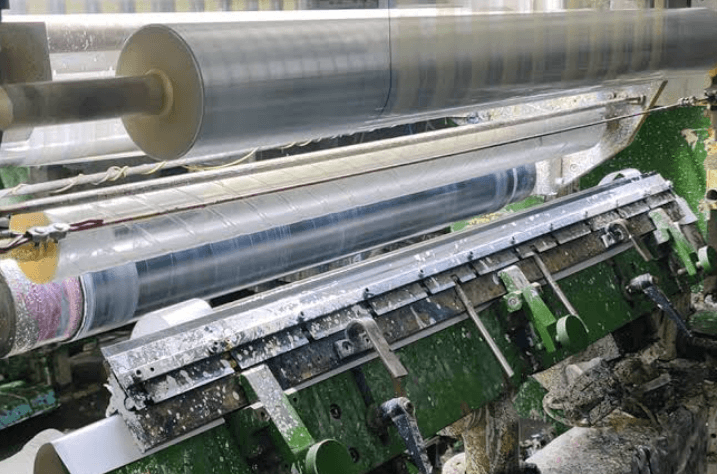
An automated inspection setup typically uses cameras to capture images of the printed web.
The cameras continuously observe the material while it passes through the inspection area. Specialized software processes the images and evaluates them according to configured quality criteria.
When a significant visual difference is identified, the system can alert the operator.
The basic workflow can include:
- Printed material enters the inspection area.
- Cameras capture images continuously.
- Lighting provides consistent illumination.
- Software analyzes the captured images.
- Potential quality problems are identified.
- Operators receive relevant alerts.
- Production conditions are investigated.
- Corrective action is taken when appropriate.
This process helps integrate quality control directly into production.
The Importance of Accurate Imaging
The effectiveness of automated inspection depends heavily on the quality of the images being analyzed.
Cameras need to capture sufficient detail while the web is moving at production speed. Their positioning must also provide a clear and stable view of the inspection area.
The appropriate imaging configuration depends on factors such as web width, production speed, substrate characteristics, and the types of defects that need to be identified.
Manufacturers should therefore consider the complete imaging environment rather than focusing on camera specifications alone.
Lighting for Reliable Inspection
Lighting plays a critical role in visual inspection.
Gravure-printed materials can have different surface characteristics, and certain substrates may reflect light more strongly than others. Glare, shadows, or inconsistent illumination can make visual analysis more difficult.
A controlled lighting arrangement helps provide more consistent images.
This allows inspection software to distinguish genuine production differences from variations caused by the inspection environment.
Monitoring Color and Registration
Color consistency is particularly important in many gravure applications.
Packaging and branded materials often need to maintain a recognizable appearance across large production quantities. Changes in ink conditions or other process variables can affect the final result.
Registration is another important consideration. When multiple colors are printed in sequence, accurate alignment is necessary to maintain the intended design.
Automated visual monitoring can provide production teams with additional information about these visual characteristics.
See also: Therapy Mist Pedicure Chair Models: Selecting the Right System for Your Spa Vision
Detecting Problems Earlier
Early defect detection can have a significant impact on production efficiency.
Suppose a streak or registration issue begins appearing during a long production run. If it remains unnoticed, the affected material may continue accumulating.
An automated alert can bring the issue to the operator’s attention sooner.
The operator can then investigate relevant machine conditions, inspect the material, and determine whether production settings or equipment require attention.
Automated inspection does not eliminate the need for troubleshooting, but it can reduce the delay between a problem appearing and becoming visible to production staff.
Reducing Waste
Waste reduction is an important goal for many printing operations.
Material, ink, energy, machine time, and labor all contribute to production costs. When defective material is produced for an extended period, these resources may be consumed without generating usable output.
Continuous inspection can help shorten the period during which a defect remains undetected.
By providing earlier information, it may allow production teams to limit the amount of material affected by an ongoing problem.
Supporting Operator Efficiency
High-speed gravure printing can make continuous manual observation difficult.
Operators have many responsibilities, including machine monitoring, material handling, process adjustments, and quality management.
Automated inspection can take responsibility for repetitive visual monitoring while operators focus on interpreting relevant alerts and investigating potential causes.
This creates a useful combination of automated observation and human expertise.
Using Inspection Data for Process Improvement
Quality inspection can generate useful information beyond individual alerts.
When inspection events are recorded over time, manufacturers can analyze recurring patterns.
For example, repeated defects may encourage a review of cylinder condition, ink management, material handling, machine settings, or other production factors.
This can help manufacturers move from reactive quality control toward preventive process improvement.
Instead of only identifying defective material, production teams can investigate why certain problems occur repeatedly.
Integrating Inspection With Gravure Equipment
An inspection solution should be designed to work with the existing production environment.
Physical installation needs to consider web movement, available space, camera placement, lighting, and operator access.
Software integration is equally important. Inspection results should be presented in a way that operators can understand quickly.
Manufacturers considering automated solutions can explore quality inspection systems as part of a broader strategy for improving quality control in gravure production.
Selecting an Appropriate Inspection Approach
Before implementing a system, manufacturers should define their quality requirements.
Important considerations include:
- Gravure printing process
- Substrate characteristics
- Production speed
- Web width
- Expected defect types
- Required inspection detail
- Lighting conditions
- Camera configuration
- Software capabilities
- Operator workflow
- Production-line integration
A solution should be matched to the actual manufacturing environment.
Training and Operator Involvement
Technology alone does not create an effective quality-control process.
Operators need to understand how inspection alerts work and what steps should be taken when a potential defect is identified.
Training can help production personnel distinguish between meaningful quality issues and acceptable variations.
Clear procedures can also help reduce unnecessary interruptions and ensure that important alerts receive appropriate attention.
Maintaining Inspection Performance
Regular maintenance is important for reliable automated inspection.
Cameras should remain properly positioned, lighting should be checked, and inspection parameters should be reviewed when production conditions change.
New designs, materials, or product requirements may require adjustments to inspection settings.
Routine maintenance and calibration can help maintain consistent performance over time.
Frequently Asked Questions
1. Why is inspection important in gravure printing?
Inspection helps manufacturers monitor print quality throughout production and identify potential problems such as registration differences, missing print, spots, streaks, and other visual inconsistencies.
2. Can automated inspection reduce gravure printing waste?
It can help reduce waste by identifying potential problems earlier. Faster detection gives operators more opportunity to investigate and correct issues before a larger quantity of material is affected.
3. Does automated inspection replace skilled operators?
No. Automated inspection can handle continuous visual monitoring, while skilled operators remain responsible for interpreting alerts, investigating causes, and making production decisions.
Conclusion
Consistent quality is essential for successful gravure printing, particularly when manufacturers produce large quantities of detailed packaging, labels, and other printed materials.
Automated visual inspection can strengthen this process by continuously monitoring production and identifying potential defects while the web remains in motion. Cameras, controlled lighting, and image-processing software work together to provide production teams with greater visibility.
The benefits can include earlier defect detection, improved consistency, reduced waste, and better production information. However, successful implementation depends on selecting an appropriate solution, configuring it correctly, maintaining the equipment, and training operators.
When automated monitoring is integrated effectively with gravure production, it can become an important part of a modern quality-control strategy and support more reliable manufacturing performance.